
All products are supplied strictly for laboratory and research use only. Not for human or veterinary use.
In 2026, researchers analysed 6,441 research peptide samples across fourteen compounds. Depending on which quality framework was applied, between 41.6% and 71.1% failed to meet basic quality criteria.
The compounds tested included BPC-157, retatrutide, tirzepatide, semaglutide, CJC-1295, ipamorelin, GHK-Cu, TB-500, tesamorelin, cagrilintide and PT-141 — in other words, most of the compounds this market actually sells. Of the 243 samples also tested for bacterial endotoxin, 15% showed measurable levels.
That is the context every purity claim sits in. This article covers what the data shows, why a purity percentage doesn’t tell the whole story, and what separates a meaningful quality claim from an unverifiable one.
What Large-Scale Testing Found
The analysis drew on a large, publicly available independent testing dataset rather than samples submitted by suppliers — an important distinction, since suppliers choose what to send for testing.
Two quality acceptance frameworks were applied:
| Framework | Criteria | Failure rate |
|---|---|---|
| Compounding Standards Model | ≥98% purity, 90–110% measured abundance | 41.6% |
| Manufactured Standards Model | ≥99.5% purity, 95–105% measured abundance | 71.1% |
The first approximates the standards applied to 503A compounded medications; the second is based on standards for approved peptide drugs.
The variability is the point. Products sold under the same compound name, at similar prices, differed substantially in what was actually in the vial.
One caveat worth stating plainly: the analysis was published as a preprint in April 2026 and has not been peer-reviewed.
Why a Purity Figure Isn’t the Whole Picture
This is the part most purity claims quietly leave out.
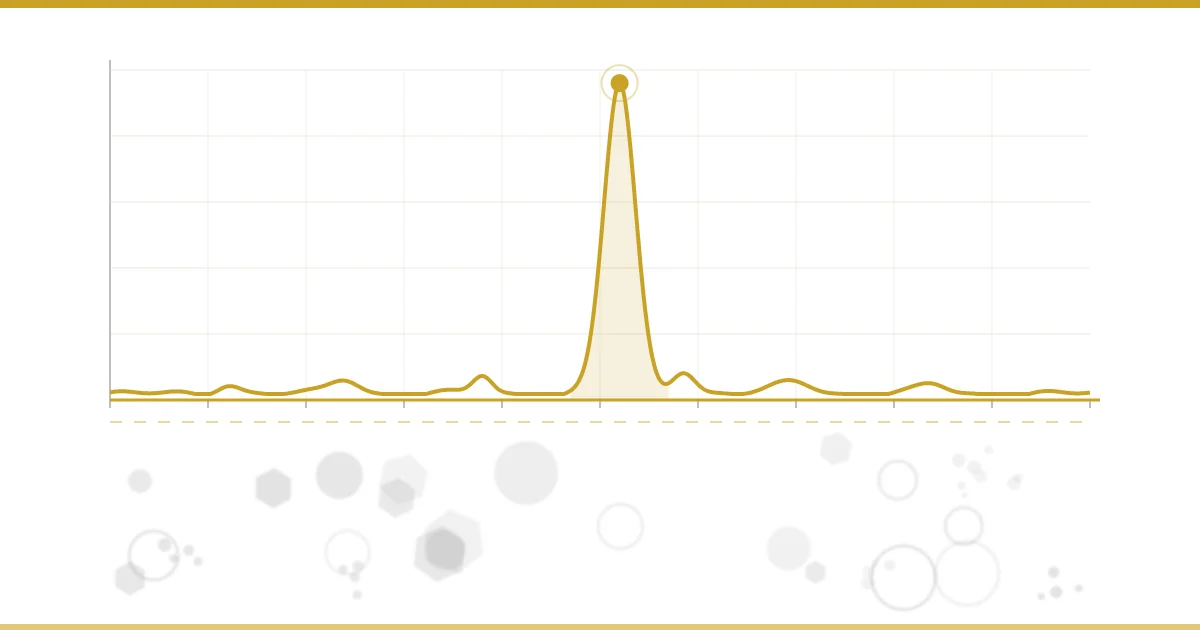
HPLC measures purity by passing a sample through a column and detecting compounds by ultraviolet absorption, typically at around 214 nm — a wavelength where the peptide bond itself absorbs strongly. Purity is calculated from the peak areas the detector registers.
The limitation follows directly from that: HPLC only sees what absorbs UV light.
Several categories of contaminant don’t:
- Bacterial endotoxins — present at measurable levels in 15% of the samples tested for endotoxin in the 2026 analysis
- Heavy metals — residues from synthesis or equipment
- Residual solvents — including trifluoroacetic acid (TFA) left over from purification
- Water and counterions — which is why net peptide content differs from purity, as covered in How to Read a Peptide Certificate of Analysis
A sample can genuinely be 99% pure by HPLC and still carry endotoxin, heavy metals or solvent residues. The purity figure isn’t wrong — it just answers a narrower question than most people assume.
Detecting those contaminants requires separate methods: LAL assay for endotoxin, ICP-MS for heavy metals, headspace gas chromatography for residual solvents. A CoA covering only HPLC and mass spectrometry doesn’t address any of them.
What the Endotoxin Numbers Actually Showed
Endotoxin testing covered only 243 of the samples — under 4% of the dataset — so the figures carry less weight than the purity results. They are still worth stating precisely.
Of those 243 samples: 30% had no detectable endotoxin, 55% were below the limit of quantification, and 15% — 36 samples — carried measurable levels between 0.5 and 40 EU/mL.
The finding that matters most is what the authors found no sign of: there was no correlation between purity and endotoxin. A high-purity sample was no more or less likely to carry endotoxin than a low-purity one.
This is the clearest demonstration of the point above. Purity and contamination are independent measurements. A supplier publishing a high purity figure has told you nothing whatsoever about endotoxin, because the two do not track together.
Mass Spectrometry Answers a Different Question Again
Mass spectrometry confirms that the target molecule is present, by measuring molecular mass against the theoretical value.
What it doesn’t do is quantify. A mass spectrum showing the correct mass confirms the compound is in there. It doesn’t confirm how much of the sample is that compound rather than something else.
HPLC and MS together answer two of the necessary questions — how pure, and what is it. Neither addresses contamination.
Why Impurities Compromise Research, Not Just Safety
There’s an assumption that low purity simply means less active compound — that a 70% pure peptide is just a weaker version of a 99% one.
Published work suggests that’s not how it works.
In a 2012 study on peptide impurities, a crude peptide preparation of roughly 70% purity produced clear biological activity in a classical pharmacological assay. When the same peptide was purified to ≥95%, it showed no activity whatsoever in the same model.
The activity hadn’t come from the peptide at all. It came from synthesis by-products. Crude material from multiple suppliers, at purities between 50% and 80%, produced the same false-positive pattern.
The implication for research is significant: impurities can generate effects that look like they come from the target compound. An experiment run on low-purity material may not just be less sensitive — it may be measuring something else entirely.
Independently third-party tested with a batch-specific Certificate of Analysis you can read before you order.
In-House Testing vs Independent Testing
Some suppliers test material in-house. Others send each batch to an independent laboratory. Both produce a certificate.
The argument for in-house testing is reasonable on its face: a manufacturer running its own analytics has direct control over method, timing and consistency, and isn’t dependent on a third party’s schedule.
The limitation is structural rather than a matter of honesty. The party with a commercial interest in the result is also the party producing it. Nothing in the certificate lets a buyer distinguish a rigorous in-house process from a weak one, because the same document is produced either way.
Independent testing doesn’t guarantee quality either. But it separates the two roles: the laboratory reporting the result has no stake in what the result says.
Given a market where between 41.6% and 71.1% of sampled material failed basic quality criteria, that separation is worth something.
What Actually Makes a Quality Claim Verifiable
Not all certificates carry the same weight. These are the things that make one checkable rather than assertable:
Batch-specific results. The certificate should correspond to the exact batch supplied, with a matching batch number. A generic product specification isn’t a Certificate of Analysis.
Independent testing. The laboratory performing the analysis should be separate from the supplier selling the product.
The chromatogram, not just the number. A purity percentage with no supporting trace can’t be checked. The chromatogram shows how the figure was reached.
Identity confirmation. Mass spectrometry results alongside purity, so the compound’s identity is established and not assumed.
Published, not on request. Certificates available before purchase rather than after are considerably more useful than ones you have to ask for.
Honest scope. A supplier stating clearly what has and hasn’t been tested is more credible than one implying comprehensive testing it hasn’t carried out.
Every batch we supply is independently third-party tested, and the certificates are published — you can read them before ordering rather than after. See our Certificates of Analysis.
Material quality also changes after it leaves the laboratory. How a compound is stored affects it, covered in How to Store Peptides, and the format it arrives in — lyophilised powder or pre-mixed pen — changes what stability questions apply, covered in Peptide Pens vs Vials.
HPLC-verified purity with a batch-specific Certificate of Analysis published for every product.
Related reading: GHK-Cu and copper peptides: what the research shows, a worked example of separating traceable evidence from figures that circulate without a source.
Frequently Asked Questions
How reliable is the research peptide market?
A 2026 analysis of 6,441 samples across fourteen compounds found that between 41.6% and 71.1% failed to meet basic quality criteria depending on the framework applied, and 15% of the samples tested for endotoxin showed measurable levels. Quality varies substantially between suppliers.
Does 99% purity mean the peptide is safe or uncontaminated?
No. HPLC purity measures the proportion of UV-absorbing material that is the target peptide. It doesn’t detect endotoxins, heavy metals or residual solvents, since those don’t absorb UV light at the relevant wavelength. A high purity figure and contamination can coexist.
Is a high-purity peptide less likely to be contaminated?
No. The 2026 analysis found no correlation between purity and endotoxin levels. The two are independent measurements, so a high purity figure tells you nothing about whether endotoxin is present.
What can’t HPLC detect?
Bacterial endotoxins, heavy metals, residual solvents such as TFA, and water or counterions. Detecting these requires separate methods — LAL assay, ICP-MS and gas chromatography respectively.
Why does purity matter for research rather than just potency?
Impurities can have their own biological activity. Published work has shown crude peptide material producing biological effects that disappeared entirely when the same peptide was purified — meaning the observed activity came from synthesis by-products, not the target compound.
Is third-party testing better than in-house testing?
In-house testing isn’t inherently unreliable, but the supplier producing the result also has a commercial interest in it, and a certificate doesn’t let a buyer distinguish a rigorous process from a weak one. Independent testing separates those roles.
What should I look for on a Certificate of Analysis?
A matching batch number, an independent testing laboratory named, the HPLC chromatogram rather than just a percentage, mass spectrometry confirming identity, and certificates published rather than supplied only on request.
References
- Mendias CL, Awan TM. Evaluation of Research Grade Peptides Marketed Directly to Consumers Reveals Extensive Variability in Purity and Measured Abundance. Preprints.org, 24 April 2026. DOI: 10.20944/preprints202604.1748.v1 — www.preprints.org/manuscript/202604.1748/v1
- Verbeken M, Wynendaele E, Lefebvre RA, Goossens E, De Spiegeleer B. The influence of peptide impurities on biological activity. Anal Biochem. 2012;421(2):547–55. PMID 22033292 — pubmed.ncbi.nlm.nih.gov/22033292/
All products are supplied strictly for laboratory and research use only. Not for human or veterinary use.