

All products are supplied strictly for laboratory and research use only. Not for human or veterinary use.
A peptide that has degraded in storage doesn’t look any different from one that hasn’t. The powder is still white, the vial still sealed. But if the compound has oxidised or broken down, any experiment built on it is working with a different material from the one on the label.
That makes storage one of the quieter ways research results go wrong. Most degradation is avoidable, and most of the rules are straightforward.
This guide covers the right temperatures, the four environmental factors that cause degradation, which peptides are most vulnerable and why, and how to handle material from the moment it arrives.
Do Peptides Need to Be Refrigerated?
For long-term storage, lyophilised (freeze-dried) peptides should be kept frozen ideally at −20 °C — rather than simply refrigerated.
Refrigeration at 2–8 °C is acceptable for shorter periods. Room temperature is generally tolerable only for short spells, such as transit.
The reason lyophilised peptides tolerate storage so well is the absence of water. Most chemical degradation reactions need water to proceed, so removing it slows them dramatically. That’s why the freeze-dried form is the one peptides are shipped and stored in.
Here’s the practical breakdown:
| Storage condition | Suitable for | Notes |
|---|---|---|
| −80 °C | Long-term archival, sensitive compounds | Maximum stability; useful for oxidation-prone sequences |
| −20 °C | Standard long-term storage | GenScript notes most lyophilised peptides are stable for several years at this temperature |
| 2–8 °C (refrigerator) | Short-term storage | Acceptable for limited periods |
| Room temperature | Transit and brief handling only | Not suitable for storage |
Source: GenScript — Peptide Storage and Handling Guidelines
The Four Factors That Degrade Peptides
Nearly all storage-related degradation comes down to four things.
1. Temperature
Chemical reactions run faster at higher temperatures. Every degradation pathway oxidation, hydrolysis, aggregation accelerates as temperature rises. Cold storage slows all of them at once, which is why temperature is the single most important factor.
2. Moisture
Water is what allows most degradation reactions to happen. Lyophilisation removes it; letting it back in undoes much of that protection.
This matters more than it might seem, because many peptides are hygroscopic they actively absorb moisture from the air. Some residues are particularly prone to this. According to GenScript, peptides containing aspartic acid, glutamic acid, lysine, arginine or histidine are prone to absorbing moisture from the air (a process called deliquescence) and should be stored in a desiccator in a tightly capped vial.
Moisture uptake also affects weighing. Absorbed water adds mass, which is part of why the net peptide content of a powder is always below 100% something we cover in detail in How to Read a Peptide Certificate of Analysis.
3. Light
Light, especially UV, drives photodegradation and accelerates oxidation. Peptides containing tryptophan and tyrosine are particularly susceptible. Storing vials in their original packaging, or in a dark container, is a simple precaution.
4. Oxygen
Oxidation is one of the most common forms of peptide degradation. Certain amino acids are far more vulnerable than others covered in the next section.
Which Peptides Are Most Vulnerable?
Stability depends heavily on a peptide’s amino acid sequence. Some residues are consistently the weak points.
| Residue | Main risk | What happens |
|---|---|---|
| Cysteine (Cys) | Oxidation | Forms unwanted disulfide bonds; can cause aggregation |
| Methionine (Met) | Oxidation | Converts to methionine sulfoxide, even under mild conditions |
| Tryptophan (Trp) | Oxidation, light | Photodegradation and oxidation products |
| Asparagine (Asn) | Deamidation | Converts to aspartate; faster at neutral to alkaline pH |
| Glutamine (Gln) | Deamidation | Same mechanism as asparagine, but slower |
| Asp, Glu, Lys, Arg, His | Moisture uptake | Absorb water from the air |
GenScript notes that peptides containing cysteine, methionine or tryptophan are prone to oxidation and may require storage under anaerobic conditions to maintain stability.
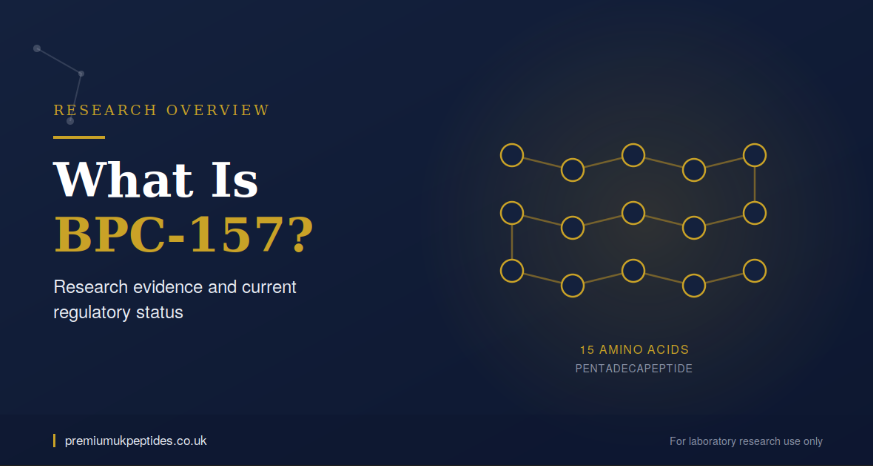
A worked example. BPC-157 has the sequence Gly-Glu-Pro-Pro-Pro-Gly-Lys-Pro-Ala-Asp-Asp-Ala-Gly-Leu-Val. It contains no cysteine, methionine, or tryptophan, so it lacks the most oxidation-prone residues. But it does contain glutamic acid, lysine and two aspartic acid residues, all associated with moisture uptake. For a sequence like this, keeping the vial sealed and dry matters more than protecting it from oxygen.
Reading a sequence this way tells you which precautions matter most for a given compound.
Third-party tested with a batch-specific Certificate of Analysis, so you know what you’re storing from day one.
Freeze-Thaw Cycles and Why Aliquoting Matters
Every time a peptide is frozen and thawed, it’s put under stress. Repeated cycles can cause aggregation and degradation, even in otherwise stable compounds.
The standard laboratory solution is aliquoting: dividing material into separate single-use portions before freezing so that each portion is only thawed once.
GenScript’s guidance is to pre-determine the amount needed for each experimental set wherever possible, and divide the material into separate vials accordingly.
A few related practices:
- Avoid frost-free freezers for long-term storage. They cycle temperature to prevent ice build-up, which exposes contents to repeated partial thawing.
- Label each aliquot with the compound, batch number and date.
- Don’t refreeze a portion that has been fully thawed if it can be avoided.
Lyophilised Powder vs Peptides in Solution
This is the most important distinction in peptide storage.
Lyophilised peptides are relatively robust. With no water present, degradation is slow.
Peptides in solution are far less stable. GenScript describes the shelf life of peptides in solution as very limited—much shorter than that of lyophilized peptides and notes that solutions are also susceptible to bacterial degradation. GenScript’s own recommendation is not to store peptides in solution at all.
Where a laboratory stock solution is unavoidable, the manufacturer guidance is consistent:
- Use a buffer in a mildly acidic range GenScript recommends pH 5–6
- Divide the solution into aliquots
- Store aliquots at −20 °C
- Avoid freeze-thaw cycles
AAPPTEC’s guidance for longer-term needs is to lyophilise peptide solutions again and store the dry powder at −20 °C in sealed vials within a desiccator.
Source: AAPPTEC — Storage and Handling of Peptides
Handling Peptides on Arrival
Good storage starts the moment material arrives.
Check the batch number. Match the number on the vial against the Certificate of Analysis. Every batch we supply has its own certificate, which you can view on our Certificates of Analysis page.
Move to cold storage promptly. Lyophilised peptides tolerate short spells at room temperature, but the sooner they reach long-term storage conditions the better.
Let cold vials reach room temperature before opening. This is one of the most commonly missed steps. Opening a cold vial draws in ambient air, and moisture condenses onto the cold powder. Allowing the sealed vial to warm first prevents this.
Minimise the time the vial is open. Reseal promptly to limit exposure to moisture and oxygen.
Store away from light. Keep vials in their original packaging or in a dark container.
Signs of Degradation
Degradation isn’t always visible, which is why storage discipline matters. But some signs warrant caution:
- Clumping or a sticky appearance in powder that should be dry — often indicates moisture uptake
- Discolouration — lyophilised peptides are typically white or off-white
- Reduced volume or collapsed cake — can indicate moisture exposure or storage problems
- Difficulty dissolving compared with previous material of the same compound
The only reliable confirmation of a peptide’s condition is analytical testing, such as HPLC.
Shipped lyophilised in sealed vials, same working day UK dispatch, with a Certificate of Analysis for every batch.
Frequently Asked Questions
Do peptides need to be refrigerated?
For long-term storage, lyophilised peptides should be frozen at −20 °C rather than refrigerated. Refrigeration at 2–8 °C is suitable only for shorter periods, and room temperature only for transit or brief handling.
What temperature should peptides be stored at?
−20 °C is the standard for long-term storage of lyophilised peptides. −80 °C offers additional stability and is useful for particularly sensitive compounds.
How long do lyophilised peptides last?
Stability depends on the sequence, but GenScript notes that most lyophilised peptides are stable for several years when stored at −20 °C away from bright light. Peptides containing cysteine, methionine or tryptophan may be less stable.
Why should I let a vial warm up before opening it?
Opening a cold vial draws in ambient air, and moisture condenses onto the cold powder. Since many peptides absorb water readily, this can accelerate degradation. Letting the sealed vial reach room temperature first prevents it.
Can peptides be stored in solution?
Peptides are far less stable in solution than as a lyophilised powder, and are also vulnerable to bacterial degradation. Manufacturer guidance recommends avoiding solution storage where possible. Where unavoidable, use a mildly acidic buffer, divide into aliquots and store at −20 °C.
Which peptides are most sensitive to storage conditions?
Peptides containing cysteine, methionine or tryptophan are most prone to oxidation. Those containing aspartic acid, glutamic acid, lysine, arginine or histidine tend to absorb moisture. Asparagine and glutamine are prone to deamidation.
References
- GenScript. Peptide Storage and Handling Guidelines. https://www.genscript.com/peptide_storage_and_handling.html
- AAPPTEC. Storage and Handling of Peptides. https://www.peptide.com/resources/storage-and-handling-of-peptides/
All products are supplied strictly for laboratory and research use only. Not for human or veterinary use.