

By the Premium UK Peptides Research Team · Updated July 2026 · 8 min read
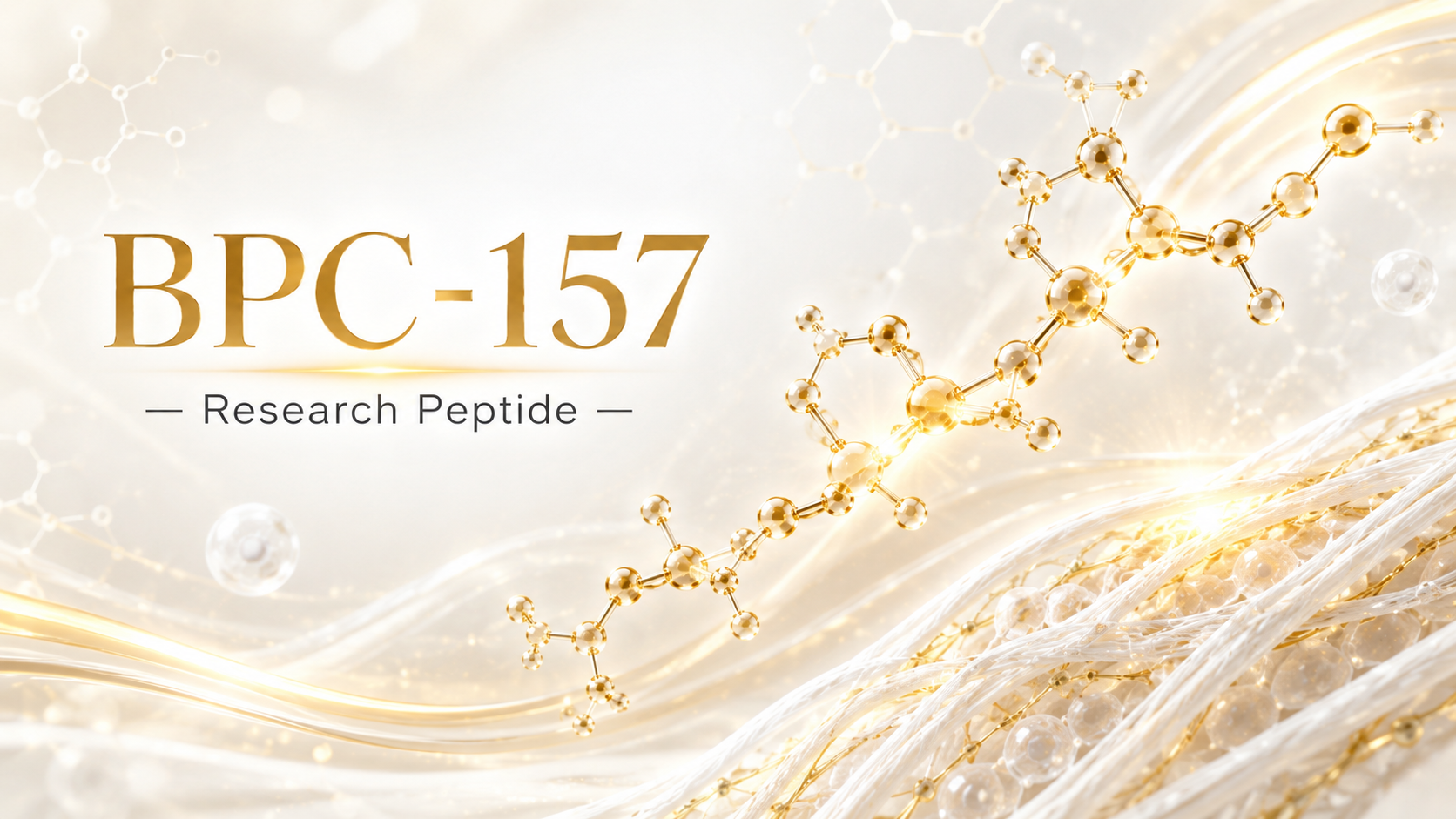
BPC-157, short for Body Protection Compound-157, is a synthetic pentadecapeptide — a chain of just 15 amino acids — modelled on a protective protein sequence naturally found in gastric juice. It has become one of the most frequently referenced peptides in regenerative research, largely because of how many biological systems it seems to touch: tendons, muscle, bone, the gut lining, and blood vessel formation all show up in the literature around it.
Here’s a breakdown of what BPC-157 actually is, how it’s believed to work in experimental models, and where the current research stands.
Key Takeaways
- BPC-157 is a 15-amino-acid synthetic peptide derived from a gastric protective protein.
- Preclinical research links it to fibroblast activity, collagen synthesis, and nitric oxide signalling.
- It’s most frequently studied in tendon, ligament, muscle, and gastrointestinal-repair contexts.
- Most available data comes from animal and in-vitro models, not human clinical trials.
- It is not approved for human or veterinary use and is sold strictly for laboratory research.
What Is BPC-157, Exactly?
“Pentadecapeptide” is just a technical way of saying the molecule is built from 15 amino acids strung together. BPC-157’s particular sequence is based on a naturally occurring compound found in human gastric juice — one thought to play a protective, stabilising role in the stomach lining. Because that native compound resists breakdown by digestive enzymes, researchers have long been curious about what else a stable, synthetic version might be capable of outside the gut.
That curiosity is what turned BPC-157 into a recurring name across regenerative and musculoskeletal research over the past two decades.
How BPC-157 Works: Biological Mechanisms
In experimental models, BPC-157 has been observed to interact with several processes tied to injury response and tissue maintenance, including fibroblast mobilisation, collagen production, nitric oxide synthesis, and reorganisation of the extracellular matrix (ECM) — the structural scaffolding that holds tissue together. A study on tendon fibroblasts published via PMC/NIH found that BPC-157 measurably increased growth hormone receptor expression in rat tendon cells, one of several proposed pathways researchers use to explain its effects on tissue repair in animal studies.
What Researchers Study BPC-157 For
Across the published literature, a handful of research themes come up repeatedly:
| Research Area | What’s Being Investigated |
|---|---|
| Tendon & ligament repair | Healing kinetics and growth-factor signalling in connective tissue |
| Skeletal muscle & bone | Recovery from mechanical injury and mineralisation markers |
| Gastrointestinal lining | Maintenance and repair of the gut mucosa |
| Angiogenesis | Blood vessel formation and endothelial/vascular function |
| Extracellular matrix | Collagen synthesis and structural tissue remodelling |
It’s worth noting that the large majority of this evidence comes from animal and cell-culture studies rather than controlled human trials — an important distinction that any responsible summary of BPC-157 research should make clear.
BPC-157 and the Gut-Brain Connection
One of the more unusual threads in BPC-157 research involves the gut-brain axis. A review published on PMC/NIH discusses how, in animal models, BPC-157 appeared to influence central nervous system pathways alongside its more established gastrointestinal effects — part of why it continues to attract interest from researchers working across both fields rather than sticking to a single specialty.
Compounds Often Studied Alongside BPC-157
In recovery-focused laboratory research, BPC-157 rarely appears in isolation. It’s frequently examined in combination with other peptides believed to act on complementary pathways, including TB-500, which is studied for its own role in cellular migration and repair, GHK-Cu, researched for its influence on collagen and tissue remodelling, and growth-hormone secretagogues like CJC-1295 with Ipamorelin. Researchers studying gut-lining recovery specifically will sometimes pair it with KPV, a peptide studied for gastrointestinal and anti-inflammatory signalling.
Is BPC-157 Approved for Human Use?
No. Despite its popularity in research and online discussion, BPC-157 has not been approved as a medicine, food, cosmetic, or supplement by UK or international regulators, and it has not completed the controlled human clinical trials required for that kind of approval. It remains, at this stage, a research compound — studied in laboratories to understand mechanisms, not a product intended for self-administration.
BPC-157 in Our Research Range
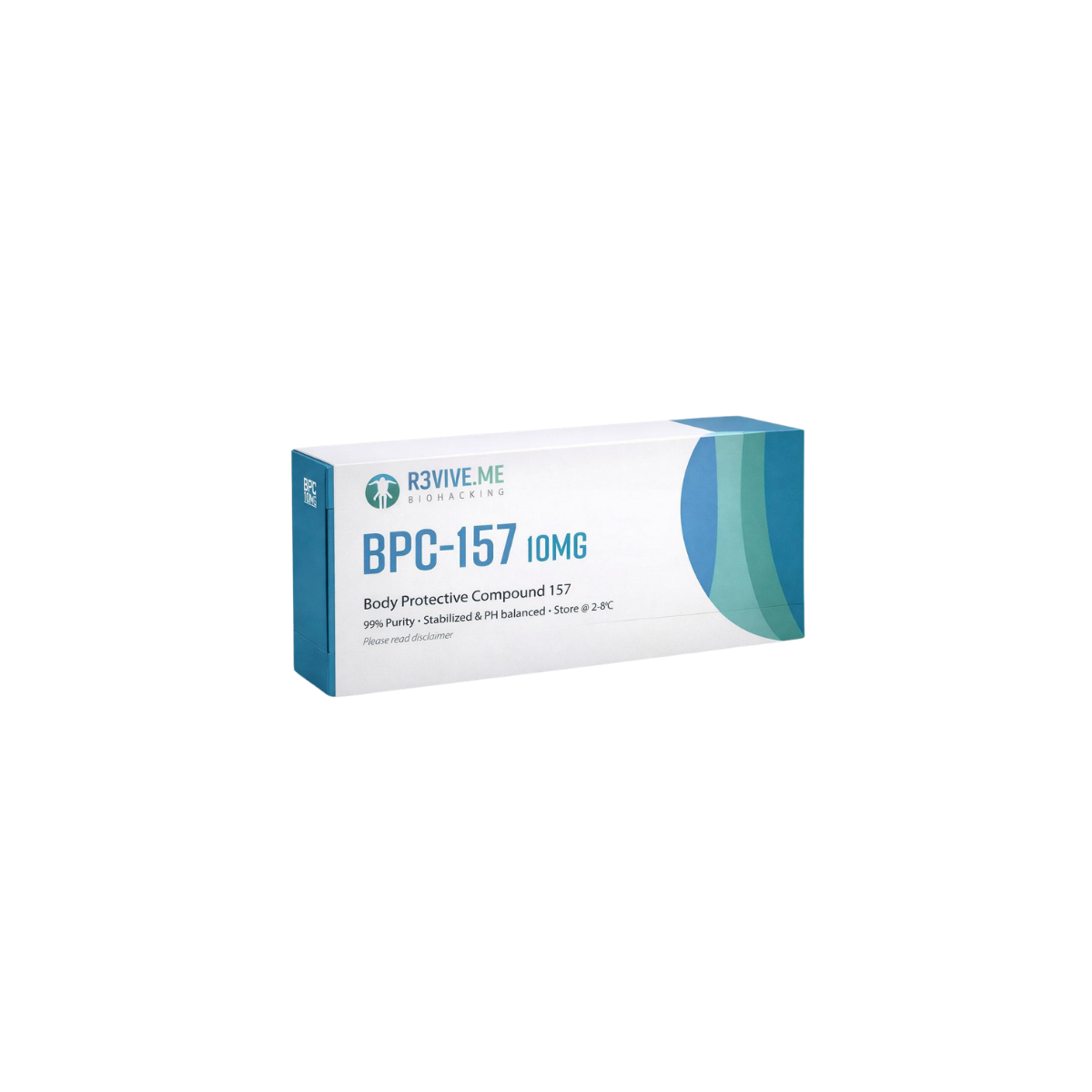
For laboratory and in-vitro research applications, Premium UK Peptides supplies BPC-157 20mg as a high-purity, third-party tested research peptide within our Recovery & Healing collection. It’s commonly studied alongside:
- TB-500 — studied for cellular migration and tissue repair signalling
- Wolverine — a recovery-focused research peptide blend
- Recovery Blend — a combined formula for recovery-oriented research protocols
- KPV — studied for gut-lining and inflammatory-pathway research
- Thymosin Alpha-1 — studied in immune-related research contexts
Every batch is independently lab tested — purity data is available on our Certificates of Analysis page before ordering from our full research peptide range.
Frequently Asked Questions
What does BPC-157 stand for? BPC-157 stands for Body Protection Compound-157, a synthetic pentadecapeptide based on a sequence found in a naturally occurring gastric protective protein. What is BPC-157 studied for? Researchers study it in relation to tissue repair, tendon and ligament healing, angiogenesis, and gastrointestinal mucosal recovery — primarily in preclinical and in-vitro models. Is BPC-157 approved for human use? No. BPC-157 is not approved as a medicine, supplement, or food product. It is supplied strictly for laboratory and in-vitro research use and is not intended for human or animal consumption. How does BPC-157 work in research models? In experimental studies, it has been observed to influence fibroblast activity, collagen synthesis, nitric oxide signalling, and extracellular matrix reorganisation — processes linked to tissue recovery. What compounds are often studied alongside BPC-157? In recovery-focused research, BPC-157 is frequently examined alongside TB-500, GHK-Cu, and growth-hormone secretagogues such as CJC-1295 with Ipamorelin.
The Bottom Line
BPC-157 has earned its place in regenerative research because of how broadly it interacts with the biology of tissue repair — from fibroblasts and collagen to blood vessel formation and gut-lining maintenance. That said, the evidence base remains firmly rooted in animal and in-vitro studies rather than human trials, which is why it continues to be treated as a research subject rather than a therapeutic product. Browse our Recovery & Healing category to see the compounds most frequently studied alongside it.
Disclaimer: This article is intended for educational and informational purposes only. BPC-157 and the compounds referenced are sold by Premium UK Peptides strictly for laboratory and in-vitro research use, are not for human or animal consumption, and are not intended to diagnose, treat, cure, or prevent any disease. Nothing in this article should be interpreted as medical advice — always consult a qualified healthcare professional for anything related to your personal health.