

By the Premium UK Peptides Research Team · Updated July 2026 · 8 min read
GHK-Cu is a naturally occurring copper-binding tripeptide — glycine, histidine, and lysine, bound to a copper (II) ion — that the body already produces and circulates in plasma, saliva, and urine. It’s one of the most extensively studied molecules in skin science, largely because of a fairly simple observation: GHK-Cu levels fall as we age, and a lot of what it appears to do in the lab lines up neatly with the changes we associate with ageing skin.
Here’s what the research actually shows about GHK-Cu’s role in collagen production, elastin synthesis, and skin regeneration.
Key Takeaways
- GHK-Cu is a copper tripeptide naturally present in the body that declines significantly with age.
- Laboratory studies show it stimulates fibroblasts to produce more collagen, elastin, and glycosaminoglycans.
- It’s studied for its role in extracellular matrix remodelling, wound healing, and antioxidant activity.
- A published human trial found GHK-Cu outperformed vitamin C and retinoic acid on collagen stimulation.
- It remains a research compound, not an approved medicine, cosmetic, or supplement.
What Is GHK-Cu, Exactly?
GHK-Cu was first identified in human plasma decades ago, and researchers quickly noticed something distinctive about it: circulating levels are highest in young adulthood and drop substantially with age. That decline roughly tracks the same timeline as visible skin ageing, which is what first pointed scientists toward studying it as a potential key to understanding — and influencing — skin regeneration.
How GHK-Cu Affects Collagen and Elastin Production
In laboratory studies using human dermal fibroblasts, GHK-Cu has been shown to increase production of collagen and elastin — the two structural proteins primarily responsible for skin’s firmness and elasticity. A widely cited review published on PMC/NIH describes how GHK-Cu stimulates collagen, elastin, and glycosaminoglycan synthesis while supporting the normal function of dermal fibroblasts, alongside effects on gene expression tied to tissue repair.
GHK-Cu, Wound Healing, and the Extracellular Matrix
Beyond collagen synthesis, GHK-Cu is studied for its role in reorganising the extracellular matrix (ECM) — the structural scaffold that holds skin cells together. Research has linked it to accelerated wound closure, reduced markers of inflammation at wound sites, and support for the fibroblast populations responsible for rebuilding damaged tissue. It’s also examined for antioxidant and anti-inflammatory activity, which researchers believe may contribute to its broader tissue-protective effects.
How GHK-Cu Compares to Other Studied Actives
One of the more frequently cited data points in GHK-Cu research comes from a controlled human study comparing it directly against two well-known actives. According to the same PMC/NIH review, topical GHK-Cu applied to thigh skin over 12 weeks improved collagen production in 70% of participants, compared with 50% for a vitamin C cream and 40% for retinoic acid in the same study — a comparison that helped cement GHK-Cu’s reputation as a serious subject of dermatological research.
| Research Area | What’s Being Investigated |
|---|---|
| Collagen & elastin synthesis | Fibroblast stimulation and structural protein production |
| Wound healing | Closure rates, inflammation markers, tissue repair speed |
| Extracellular matrix | Reorganisation and remodelling of skin’s structural scaffold |
| Antioxidant activity | Cellular protection against oxidative stress |
| Gene expression | Modulation of genes associated with tissue repair and regeneration |
Compounds Often Studied Alongside GHK-Cu
In regenerative and dermatological research, GHK-Cu is rarely studied in isolation. It’s frequently examined alongside AHK-Cu, a related copper peptide with a research focus that leans more toward hair follicle biology, and BPC-157, which researchers use as a comparison point for tissue-repair signalling more broadly. You can read more about BPC-157’s own research profile in our dedicated BPC-157 overview.
GHK-Cu in Our Research Range
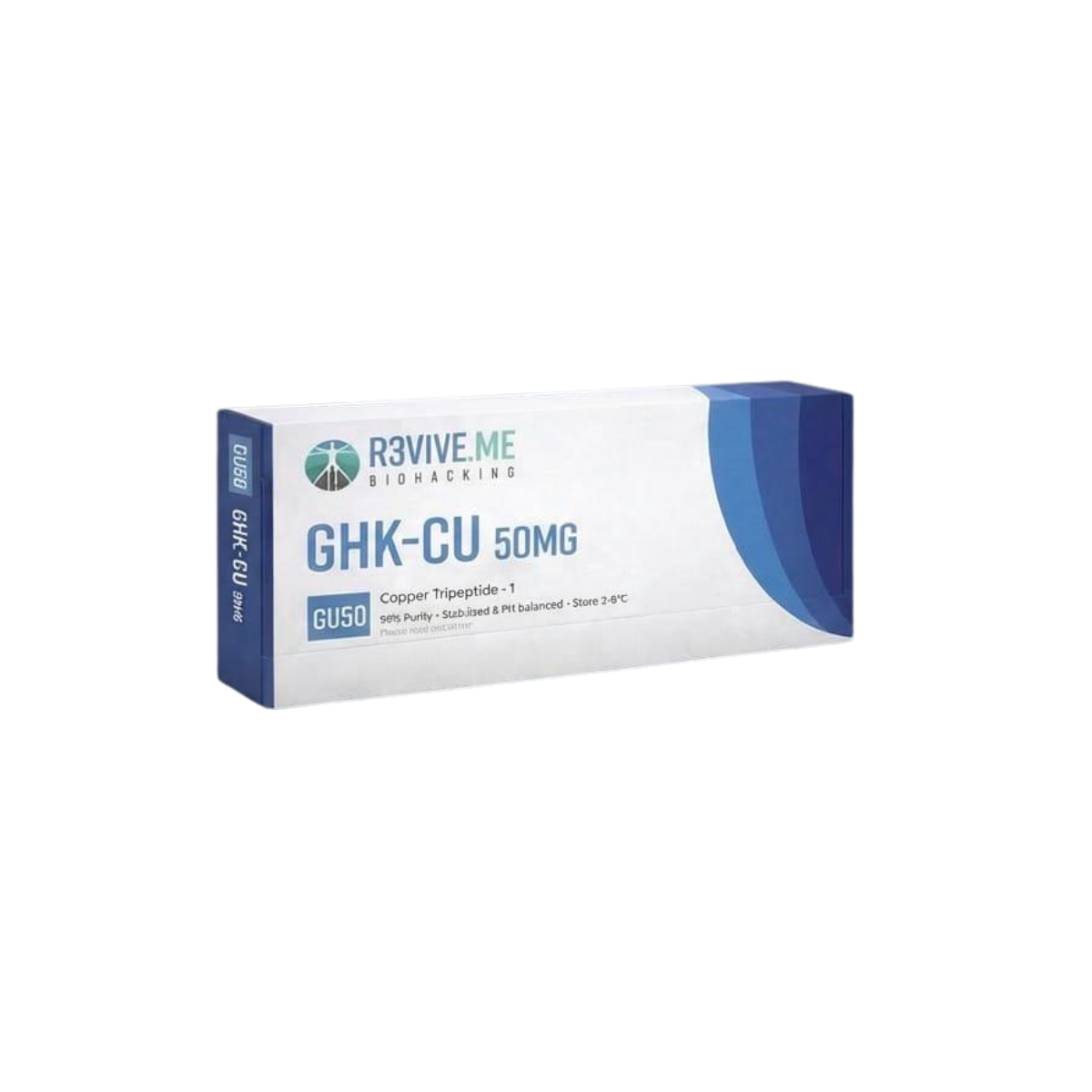
For laboratory and in-vitro research applications, Premium UK Peptides supplies GHK-Cu 50mg as a high-purity, third-party tested research peptide within our Skin, Hair & Beauty collection. It’s frequently studied alongside:
- Glow — a combined skin-support research formula
- AHK-Cu — a related copper peptide studied for hair follicle research
- BPC-157 — studied for broader tissue-repair signalling
Every batch is independently lab tested — purity data is available on our Certificates of Analysis page before ordering from our full research peptide range.
Frequently Asked Questions
What is GHK-Cu? GHK-Cu is a naturally occurring copper-binding tripeptide made of glycine, histidine, and lysine, found in human plasma, saliva, and urine, and studied for its role in skin and tissue regeneration. How does GHK-Cu affect collagen? In laboratory studies, GHK-Cu has been shown to stimulate dermal fibroblasts to increase production of collagen, elastin, and glycosaminoglycans — key structural components of skin. Does GHK-Cu decline with age? Yes. Research indicates GHK plasma concentrations fall substantially between early adulthood and older age, which is part of why it is studied in the context of skin ageing. Is GHK-Cu approved for human use? No. As supplied by research peptide companies, GHK-Cu is not approved as a medicine, cosmetic, or supplement. It is sold strictly for laboratory and in-vitro research use. What compounds are studied alongside GHK-Cu for skin research? Researchers frequently examine GHK-Cu alongside AHK-Cu, BPC-157, and combined recovery-formula peptides to compare effects on extracellular matrix remodelling and tissue regeneration.
The Bottom Line
GHK-Cu’s appeal in skin research comes down to a fairly compelling pattern: a molecule that naturally declines with age, paired with laboratory evidence that restoring its activity influences the exact structural proteins responsible for youthful-looking skin. The evidence base includes both cell-culture data and controlled human trials, making it one of the better-documented peptides in dermatological research. Browse our Skin, Hair & Beauty category to see the full range of compounds studied in this space.
Disclaimer: This article is intended for educational and informational purposes only. GHK-Cu and the compounds referenced are sold by Premium UK Peptides strictly for laboratory and in-vitro research use, are not for human or animal consumption, and are not intended to diagnose, treat, cure, or prevent any disease. Nothing in this article should be interpreted as medical advice — always consult a qualified healthcare professional for anything related to your personal health.