
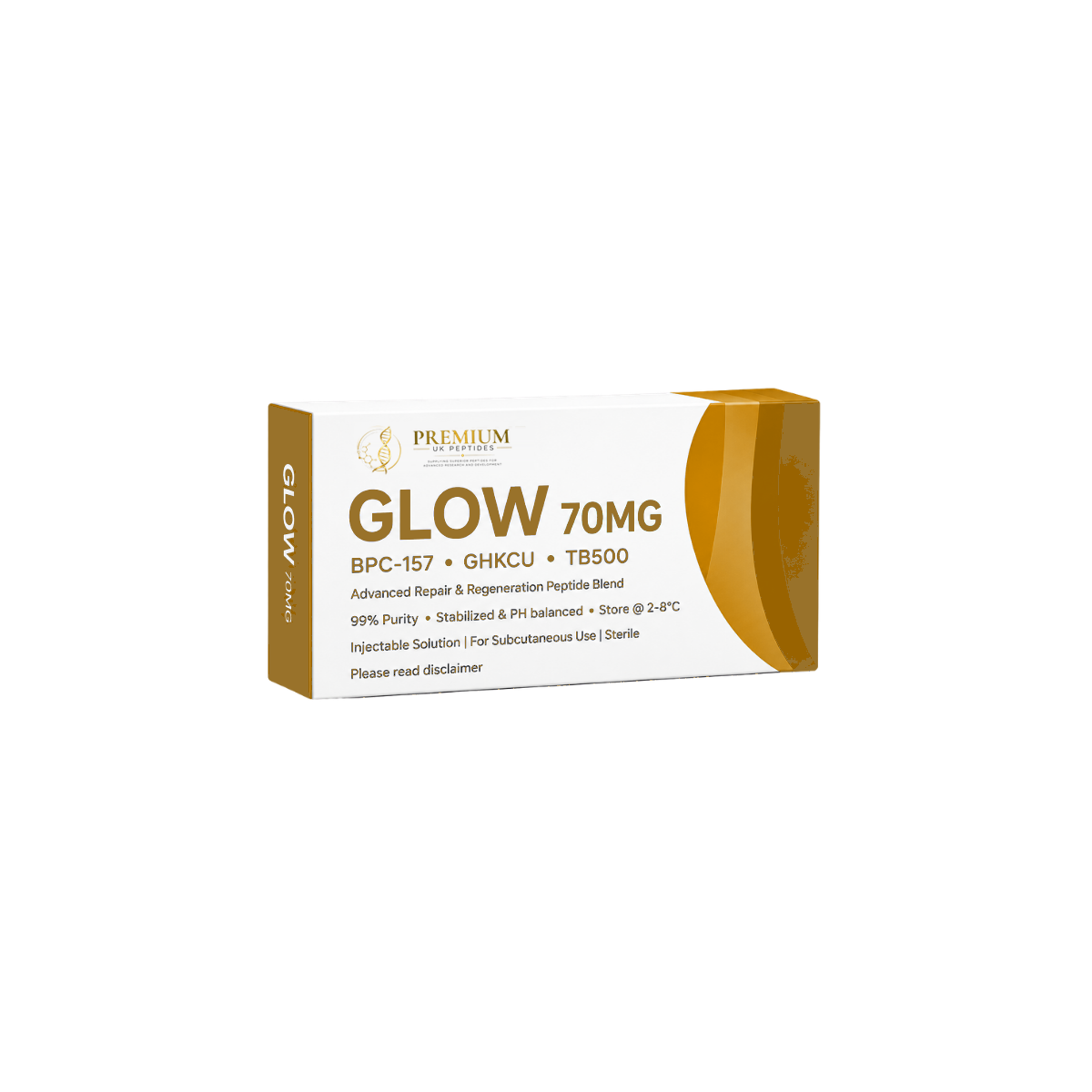
GLOW 70mg is a multi-peptide research formulation containing BPC-157, GHK-Cu and TB-500. It is supplied as a research product for laboratory and scientific research applications involving peptide characterisation, molecular biology, cellular research and related experimental studies.
The formulation contains a total of 70mg of peptide material. The individual quantities of BPC-157, GHK-Cu and TB-500 are not specified on the product information currently available, so researchers should refer to the applicable batch documentation for detailed composition information.
GLOW 70mg is intended for research purposes only and is not presented as a product for human or veterinary use.
What Is GLOW 70mg?
GLOW 70mg is a combined peptide research formulation containing three named research materials:
Each component has different molecular characteristics and has been investigated in scientific literature. Combining these materials into a single research formulation provides researchers with a defined multi-component material for laboratory investigation.
The term GLOW refers to the product formulation and does not represent a separate peptide or individual chemical compound.
GLOW 70mg Composition
The confirmed product information identifies the following components:
| Component | Research Material |
|---|---|
| BPC-157 | Peptide research material |
| GHK-Cu | Copper-binding peptide research material |
| TB-500 | Thymosin beta-4-related research material |
| Total formulation | 70mg |
Individual component quantities should be confirmed from the relevant product documentation or batch Certificate of Analysis where available.
BPC-157 Research
BPC-157 is a synthetic peptide that has been investigated primarily in preclinical research.
Scientific studies have examined BPC-157 in relation to different cellular and molecular processes, making it a subject of ongoing peptide research.
Research involving BPC-157 has included investigations into:
- Cellular signalling
- Molecular pathways
- Tissue biology
- Experimental models
- Peptide activity and characterisation
Current scientific reviews emphasise that much of the available evidence for BPC-157 remains preclinical, and human evidence is comparatively limited. Published literature can be reviewed on PubMed (BPC-157).
GHK-Cu Research
GHK-Cu, also known as glycyl-L-histidyl-L-lysine copper, is a copper-binding peptide complex studied in biochemical and cellular research.
Researchers investigate GHK-Cu in relation to:
- Copper-peptide interactions
- Molecular biology
- Cellular signalling
- Biochemical processes
- Peptide characterisation
- Cellular and tissue research models
GHK-Cu is one of the peptide materials included in recent scientific reviews examining emerging peptides and their proposed biological mechanisms. See published research on PubMed (GHK-Cu).
TB-500 Research
TB-500 is commonly described in research literature in connection with thymosin beta-4-related peptide research.
Scientific investigations have examined thymosin beta-4 and related peptide materials in preclinical models involving cellular and molecular processes.
Research areas associated with this field include:
- Cellular signalling
- Molecular interactions
- Cytoskeletal processes
- Experimental tissue models
- Peptide biology
Evidence for TB-500 and related compounds remains an area of ongoing investigation, with recent reviews noting that human clinical evidence is limited compared with preclinical research. Thymosin beta-4 literature is indexed on PubMed (Thymosin beta-4).
Why Are BPC-157, GHK-Cu and TB-500 Studied?
The three components of GLOW 70mg have distinct molecular characteristics, which makes them subjects of research across different areas of peptide science.
Researchers may investigate these materials to better understand:
- Peptide structure and characteristics
- Cellular signalling pathways
- Molecular interactions
- Biochemical activity
- Cellular responses
- Experimental tissue models
- Peptide stability and characterisation
- Interactions between peptide materials and biological systems
These are research areas rather than established human-use benefits. The scientific literature includes a substantial amount of preclinical research, while robust human evidence for many emerging peptides remains limited.
GLOW 70mg Research Applications
GLOW 70mg may be relevant to laboratory research involving:
Peptide Research
Investigation of peptide structure, characteristics, stability and interactions within controlled research environments.
Molecular Biology
Research into molecular pathways and interactions associated with the individual peptide components.
Cellular Research
Experimental studies examining cellular responses and signalling mechanisms.
Biochemical Research
Investigation of peptide-related biochemical processes and molecular interactions.
Comparative Peptide Research
Research comparing different peptide materials, formulations or experimental conditions — for example alongside related formulations such as KLOW 80mg, Recovery Blend 30mg or Wolverine 20mg.
The specific application and experimental methodology should be determined by the relevant research laboratory according to its own validated protocols.
GLOW 70mg Product Specifications
| Specification | Details |
|---|---|
| Product Name | GLOW 70mg |
| Product Type | Multi-peptide research formulation |
| BPC-157 | Included |
| GHK-Cu | Included |
| TB-500 | Included |
| Total Quantity | 70mg |
| Research Category | Peptide Research |
| Intended Application | Laboratory & scientific research |
| Storage Information | 2–8°C as stated on product packaging |
Purity: The product packaging states 99% purity. This figure should be treated as a product/batch specification and independently verified against the applicable Certificate of Analysis where available.
Storage Information
The product packaging specifies storage at 2–8°C.
Researchers should follow the current product label, batch documentation and applicable laboratory storage procedures. Avoid conditions that fall outside the manufacturer’s specified storage requirements.
For research traceability, laboratories should record relevant product and batch information when storing research materials.
Product Quality & Documentation
Research materials should be evaluated using accurate product identification and appropriate batch documentation.
Where available, researchers should review the relevant Certificate of Analysis for the specific batch, including information relating to composition, analytical testing and product specifications.
Premium UK Peptides aims to provide clear information about its research peptide products so researchers can evaluate materials according to their own laboratory requirements. Browse related materials in our Skin, Hair & Beauty Research Peptides collection.
GLOW 70mg FAQs
What is GLOW 70mg?
GLOW 70mg is a multi-peptide research formulation containing BPC-157, GHK-Cu and TB-500.
What peptides are in GLOW 70mg?
The product is identified as containing BPC-157, GHK-Cu and TB-500. The total product quantity is 70mg.
Why was GLOW 70mg formulated as a three-peptide blend?
GLOW 70mg combines BPC-157, GHK-Cu and TB-500 into one defined research material. This gives laboratories a single multi-component sample for studying how peptides with different molecular characteristics behave together, instead of sourcing and preparing each material separately.
Why are BPC-157, GHK-Cu and TB-500 researched together?
Each peptide has been studied in different areas of preclinical research — BPC-157 in cellular and tissue models, GHK-Cu in copper-peptide and biochemical research, and TB-500 in thymosin beta-4-related research. Researchers may combine them to investigate how materials with distinct mechanisms interact within the same experimental system. Much of this evidence remains preclinical.
How is GLOW 70mg different from buying BPC-157, GHK-Cu and TB-500 separately?
Individual products such as BPC-157, GHK-Cu and TB-500 allow researchers to control the quantity of each material independently. GLOW 70mg supplies the three as a pre-combined formulation, which suits research focused on the blend as a whole.
Why is the product called GLOW?
GLOW is the product name for this formulation. It sits within our Skin, Hair & Beauty Research Peptides category, as GHK-Cu is widely discussed in skin-related research literature. The name does not represent a separate compound and does not imply any established effect.
Who is GLOW 70mg intended for?
GLOW 70mg is intended for qualified researchers, laboratories and scientific institutions conducting peptide, molecular or cellular research. Researchers are responsible for assessing its suitability for their own experimental protocols. Explore our full range of research peptides.
What is BPC-157 researched for?
BPC-157 has been investigated in preclinical research involving cellular and molecular processes. Current reviews indicate that much of the evidence remains preclinical.
What is GHK-Cu?
GHK-Cu is a copper-binding peptide complex that has been studied in biochemical, molecular and cellular research.
What is TB-500?
TB-500 is a peptide research material commonly discussed in relation to thymosin beta-4-related research and associated molecular and cellular processes.
Is GLOW 70mg a research product?
Yes. GLOW 70mg is presented as a research product for laboratory and scientific research purposes.
How should GLOW 70mg be stored?
The product packaging specifies storage at 2–8°C. Researchers should follow the current product documentation and their own laboratory storage procedures.
Is GLOW 70mg intended for human use?
No. GLOW 70mg is supplied for laboratory and scientific research purposes and is not intended for human or veterinary use.
Research-Only Statement
GLOW 70mg is supplied strictly for laboratory and scientific research purposes. It is not intended for human or veterinary use, diagnosis, treatment, prevention or management of any disease or medical condition.
Information regarding BPC-157, GHK-Cu and TB-500 describes areas of scientific investigation and should not be interpreted as a claim of established human therapeutic efficacy or safety.
Researchers are responsible for determining the suitability of research materials for their own experimental requirements and for following applicable laboratory procedures and regulations. For UK regulatory information, refer to the MHRA.
Reviews
There are no reviews yet.