
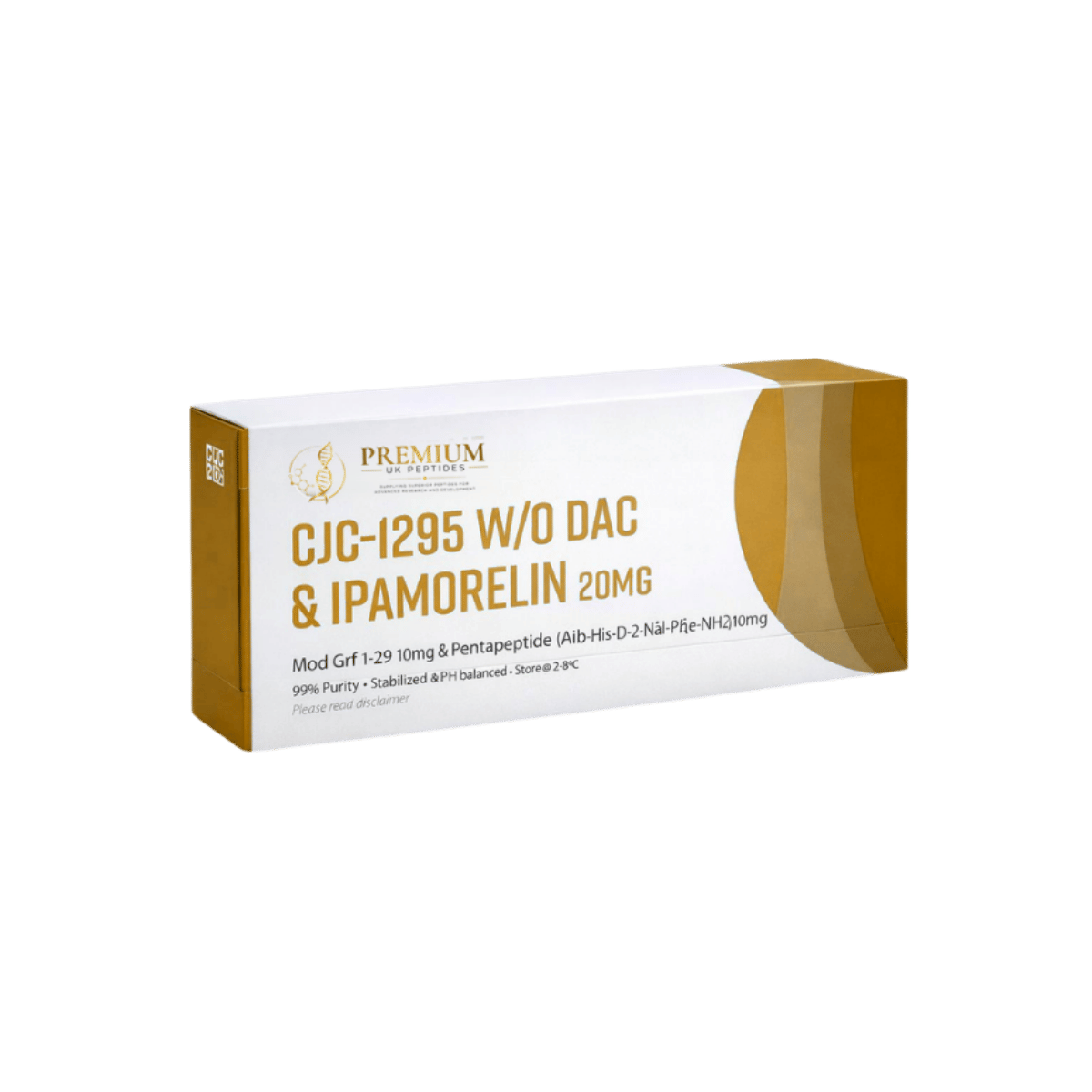
CJC-1295 (No DAC) + Ipamorelin is a research peptide combination studied in relation to growth hormone signalling and related endocrine pathways. CJC-1295 without DAC is commonly associated with Modified GRF (1-29), while Ipamorelin is researched in connection with the growth hormone secretagogue receptor (GHS-R1a).
The two compounds are associated with different signalling pathways, making this combination relevant to laboratory research examining GHRH-related signalling, peptide-receptor interactions and growth hormone regulatory mechanisms.
Research Overview
CJC-1295 No DAC, also commonly referred to as Modified GRF (1-29), is a research compound associated with the growth hormone-releasing hormone (GHRH) pathway. Ipamorelin is a peptide research compound studied in relation to GHS-R1a signalling.
Research involving CJC-1295 and Ipamorelin examines how these different signalling mechanisms interact within experimental models. The combination is therefore of interest in studies involving peptide signalling, endocrine pathways and growth hormone regulation.
Research findings can vary according to the experimental model, methodology and conditions used. Published research should always be assessed against the exact compound and formulation being investigated.
What Does CJC-1295 No DAC Mean?
CJC-1295 No DAC means a form of CJC-1295 without the Drug Affinity Complex (DAC). The abbreviation W/O DAC simply means “without DAC.”
In the research-peptide market, CJC-1295 without DAC is commonly associated with Modified GRF (1-29). CJC-1295 with DAC and CJC-1295 without DAC should be treated as distinct research materials because their molecular structures differ.
When reviewing scientific literature or analytical documentation, researchers should confirm that the material being studied corresponds to the exact compound specified in the relevant research or Certificate of Analysis.
CJC-1295 No DAC and Ipamorelin Research
The combination of CJC-1295 No DAC and Ipamorelin is relevant to laboratory research examining different aspects of growth hormone signalling.
CJC-1295 No DAC is associated with GHRH-related signalling, while Ipamorelin is studied in relation to GHS-R1a receptor activity. Research into these pathways can help examine how different peptide signalling mechanisms interact within experimental systems.
This makes CJC-1295 + Ipamorelin a useful subject for comparative and pathway-focused peptide research.
Research Focus
- GHRH receptor signalling research
- GHS-R1a receptor research
- Growth hormone signalling pathways
- Peptide-receptor interactions
- Endocrine signalling mechanisms
- Pituitary-related research
- Comparative research involving GHRH analogues
- Experimental peptide signalling models
Research Material Information
CJC-1295 (No DAC) + Ipamorelin is supplied as a laboratory research material. The product is intended for research applications where the specified peptide combination is relevant to the experimental objective.
Product identity, batch information and analytical results should be checked against the applicable product documentation and Certificate of Analysis where provided.
For related research materials, you can also explore our
Ipamorelin,
IGF-1 LR3,
HGH,
BPC-157
and
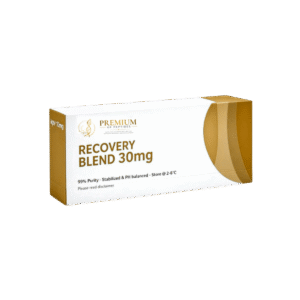
Recovery Blend
research products.
Certificate of Analysis
Where available, a batch-specific Certificate of Analysis (CoA) provides analytical information relating to the relevant product and batch.
Depending on the applicable batch documentation, the CoA may contain information such as product identification, batch or lot number, reported purity and analytical testing information.
Researchers should always match the Certificate of Analysis with the exact product and batch supplied.
View our Certificates of Analysis
Storage Information
- Follow the storage conditions stated on the applicable product documentation.
- Keep the product protected from excessive heat, moisture and prolonged exposure to light.
- Keep the original container securely closed when not being handled for laboratory purposes.
- Refer to the applicable batch documentation for any specific storage requirements.
For laboratory and in-vitro research use only. Not for human or veterinary use.
Reviews
There are no reviews yet.