
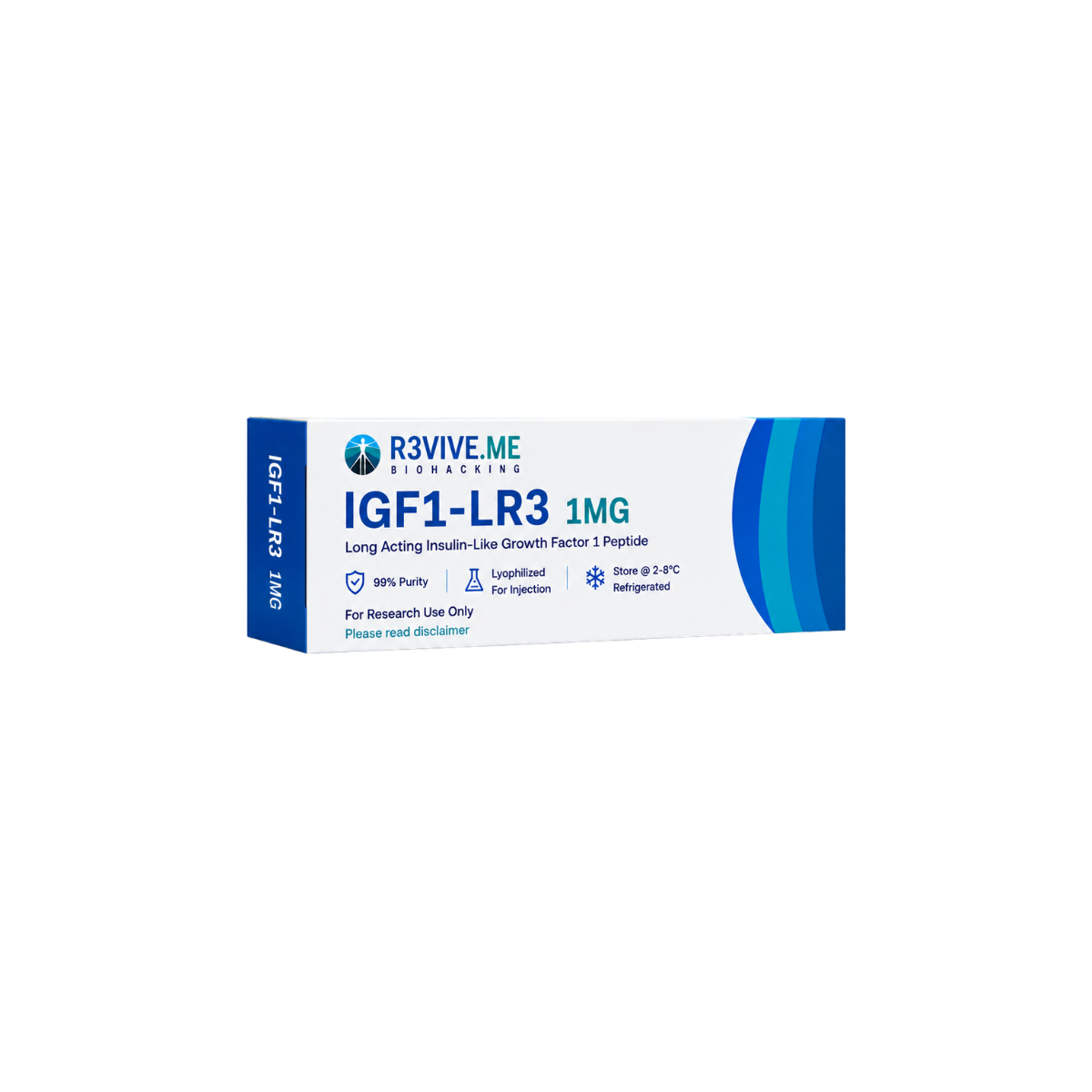
IGF-1 LR3 (Insulin-Like Growth Factor-1 Long Arginine 3) represents a synthetically engineered iteration of endogenous IGF-1. By extending its half-life, scientists have created a compound better suited for rigorous laboratory inquiry. Its design—specifically its diminished affinity for IGF-binding proteins combined with heightened biological stability—has positioned it as a cornerstone in studies concerning regenerative biology, muscle physiology, and complex endocrine systems. Current academic focus rests on the peptide’s capacity to influence signaling pathways linked to protein synthesis, cellular repair, and systemic tissue development.
Mechanisms of Action
Experimental models utilize IGF-1 LR3 to probe the IGF-1 receptor, a vital junction governing cellular survival, differentiation, and proliferation. By isolating this pathway, researchers can better map how activation influences skeletal muscle maintenance and the body’s ability to rebound from physiological stressors. Since IGF-1 acts as a downstream mediator of growth hormone signaling, this analogue serves as a precision tool for dissecting the intricate endocrine mechanisms that regulate growth and structural restoration.
Ongoing laboratory work continues to evaluate the peptide’s role in:
- Muscle hypertrophy and metabolic homeostasis.
- Satellite cell recruitment.
- Collagen production and connective tissue integrity.
- Biological markers associated with healthy aging.
Comparative Research Applications
In many scholarly settings, IGF-1 LR3 is utilized in parallel with compounds like HGH, CJC-1295, Ipamorelin, Tesamorelin, and various recovery blends. These comparative studies aim to elucidate how complementary pathways—anabolic and regenerative alike—interact to govern tissue biology and endocrine balance.
Quality Standards
Premium UK Peptides provides IGF-1 LR3 in a 1mg format, produced specifically for high-level research environments. Each production lot is subject to rigorous quality control measures, ensuring the purity and consistency required for sensitive scientific applications.
Benefits
- Facilitates detailed analysis of IGF-1 receptor signaling dynamics.
- Serves as a model for cellular growth and regenerative processes.
- Provides insights into muscle protein synthesis and physiology.
- Enables evaluation of connective tissue maintenance.
- Assists in the study of recovery biology.
- Aids in the investigation of endocrine signaling pathways.
- Offers a framework for researching the mechanisms of healthy aging.
- Manufactured to meet stringent laboratory-grade specifications.
Storage and Handling Protocols
To maintain the structural integrity of the peptide, adhere to the following guidelines:
- Maintain a refrigerated environment consistently between 2°C and 8°C.
- Shield vials from ambient heat, moisture, and UV light exposure.
- Ensure the vial remains hermetically sealed until the moment of use.
- Adhere to standard laboratory protocols for storage post-reconstitution.
- Prevent damage to the peptide structure by avoiding multiple freeze-thaw cycles.
Reviews
There are no reviews yet.