
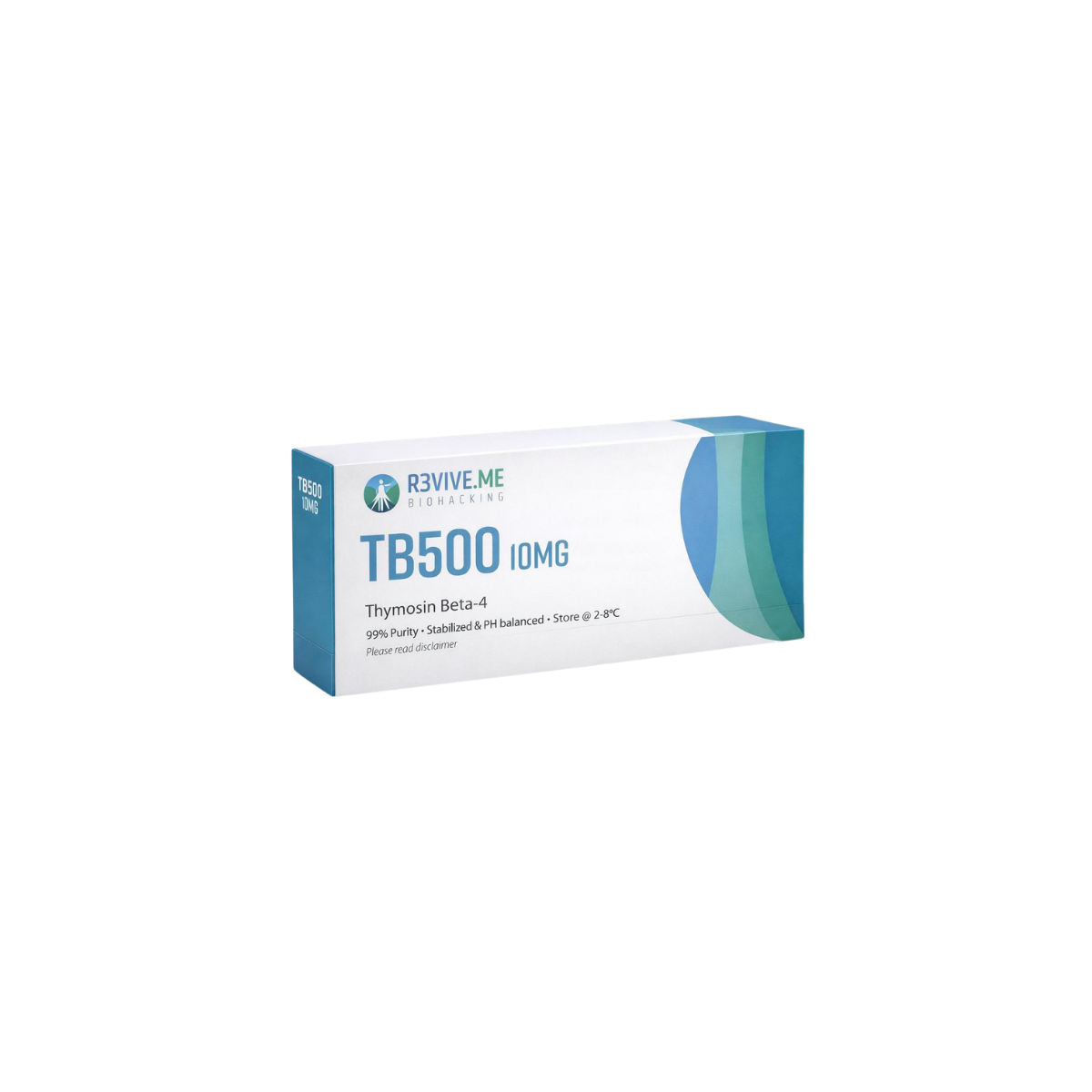
TB-500 functions as a synthetic derivative of Thymosin Beta-4 (TB4)—a protein naturally present in the human body that serves as a cornerstone for cellular motility, tissue restoration, and injury recovery. Due to its status as a potent fragment of the TB4 molecule, it occupies a central role in current inquiries regarding regenerative medicine, angiogenesis, and the biology of connective tissues. Ongoing studies primarily center on how this peptide interfaces with the intricate biological networks governing cellular preservation and structural healing.
Mechanisms of Action
Scientific focus currently centers on the peptide’s influence over actin dynamics. This fundamental biological process dictates how cells shift, organize, and mend damaged tissue. By modulating these pathways, investigators aim to better understand the nuances of muscle physiology, the structural integrity of tendons and ligaments, and the systematic remodeling of the extracellular matrix. Because precise cellular migration acts as the engine for successful tissue renewal, TB-500 remains a high-priority compound for researchers in this field.
Broader laboratory investigations look at its impact on collagen alignment, the progression of vascular networks, and the modulation of inflammatory responses. By evaluating how these systems stabilize tissue over the long term, researchers have established TB-500 as an essential asset across cardiovascular, orthopedic, and musculoskeletal study programs.
Research Synergy
In experimental settings, TB-500 is often paired with compounds such as BPC-157, GHK-CU, CJC-1295 + Ipamorelin, and various recovery blends. These synergistic protocols are designed to observe how peptides interact to accelerate muscle repair and improve the durability of the extracellular matrix. Such comparative research is vital for the ongoing advancement of peptide-based regenerative methodologies.
Quality Standards
Premium UK Peptides provides TB-500 in a 20mg concentration, formulated specifically for high-purity laboratory applications. Each batch adheres to strict quality assurance protocols, undergoing rigorous analytical testing to guarantee the consistency and reliability required for professional scientific inquiry.
Benefits
- Facilitates advanced study into tissue regeneration.
- Targeted in research regarding cellular migration and repair signaling.
- Examined for its impact on the biology of ligaments and tendons.
- Utilized in investigations of muscle recovery processes.
- Studied for potential effects on vascular development and angiogenesis.
- Investigated for influence over collagen synthesis and organization.
- Applied in research concerning the maintenance of connective tissues.
- Delivered as a high-purity, laboratory-grade research agent.
- Produced under stringent manufacturing and safety guidelines.
- Engineered to meet the requirements of complex scientific experimentation.
Storage Information
- Maintain a refrigerated environment between 2°C and 8°C.
- Shield from heat, moisture, and direct light exposure.
- Ensure the vial remains securely sealed until the moment of laboratory application.
- Adhere to standard laboratory protocols for storage once reconstitution has occurred.
- Prevent degradation by avoiding repeated cycles of freezing and thawing.
Reviews
There are no reviews yet.