
Unlocking Cellular Energy Through Smarter Nutritional Support
As research into mitochondrial health continues to advance, MOTS-C has emerged as one of the most exciting peptides in metabolic science. Derived from mitochondrial DNA, MOTS-C is being extensively studied for its role in cellular energy regulation, metabolic flexibility, and exercise adaptation.
While MOTS-C is the primary focus of many research protocols, its effectiveness may be enhanced by pairing it with carefully selected supplements that support mitochondrial function, ATP production, recovery, and overall metabolic health.
This guide explores a research-informed supplement stack designed to complement MOTS-C and promote optimal cellular performance.
Why Mitochondrial Health Matters
Mitochondria are often referred to as the “powerhouses” of the cell because they produce ATP—the body’s primary source of cellular energy. Healthy mitochondrial function is essential for:
- Efficient energy production
- Physical performance
- Exercise recovery
- Metabolic flexibility
- Healthy aging
- Overall cellular function
Researchers continue to investigate how MOTS-C interacts with these biological processes, making it an increasingly popular peptide in metabolic and longevity research.
Core Mitochondrial Support
Coenzyme Q10 (Ubiquinol)
CoQ10 plays a central role in the mitochondrial electron transport chain, helping cells efficiently generate ATP while providing antioxidant support.
Benefits include:
- Supports ATP production
- Helps maintain mitochondrial function
- Provides antioxidant protection
Suggested Intake: 100–300 mg daily
Pyrroloquinoline Quinone (PQQ)
PQQ has attracted significant attention for its ability to support mitochondrial biogenesis—the natural process of creating new mitochondria.
Benefits include:
- Supports mitochondrial renewal
- Encourages cellular energy production
- Complements CoQ10 supplementation
Suggested Intake: 10–20 mg daily
Acetyl-L-Carnitine (ALCAR)
ALCAR helps transport fatty acids into mitochondria, allowing them to be converted into usable energy.
Benefits include:
- Supports fat metabolism
- Encourages mitochondrial efficiency
- Supports cognitive performance
Suggested Intake: 1–2 g daily
Metabolic & Insulin Sensitivity Support
Berberine
Berberine is widely researched for its interaction with AMPK, a key regulator of metabolic function.
Benefits include:
- Supports glucose metabolism
- Encourages metabolic efficiency
- Supports healthy insulin sensitivity
Suggested Intake: 500 mg once or twice daily
Magnesium Glycinate
Magnesium participates in hundreds of enzymatic reactions involved in energy production and muscle function.
Benefits include:
- Supports ATP production
- Promotes muscle recovery
- Supports restful sleep
Suggested Intake: 200–400 mg daily
Chromium Picolinate
Chromium is an essential trace mineral involved in carbohydrate metabolism.
Benefits include:
- Supports glucose utilization
- Helps maintain healthy blood sugar metabolism
- Supports metabolic balance
Suggested Intake: 200–400 mcg daily
Exercise & Performance Support
Creatine Monohydrate
Creatine remains one of the most researched sports nutrition ingredients available today.
Benefits include:
- Supports ATP regeneration
- Helps improve strength and power output
- Supports exercise recovery
Suggested Intake: 3–5 g daily
Electrolytes
Proper hydration is essential for optimal cellular function and athletic performance.
Electrolytes support:
- Muscle contraction
- Hydration
- Energy production
- Physical performance
Consume adequate electrolytes daily, particularly during periods of intense exercise.
Recovery & Longevity Support
NAD+ Precursors (NMN or NR)
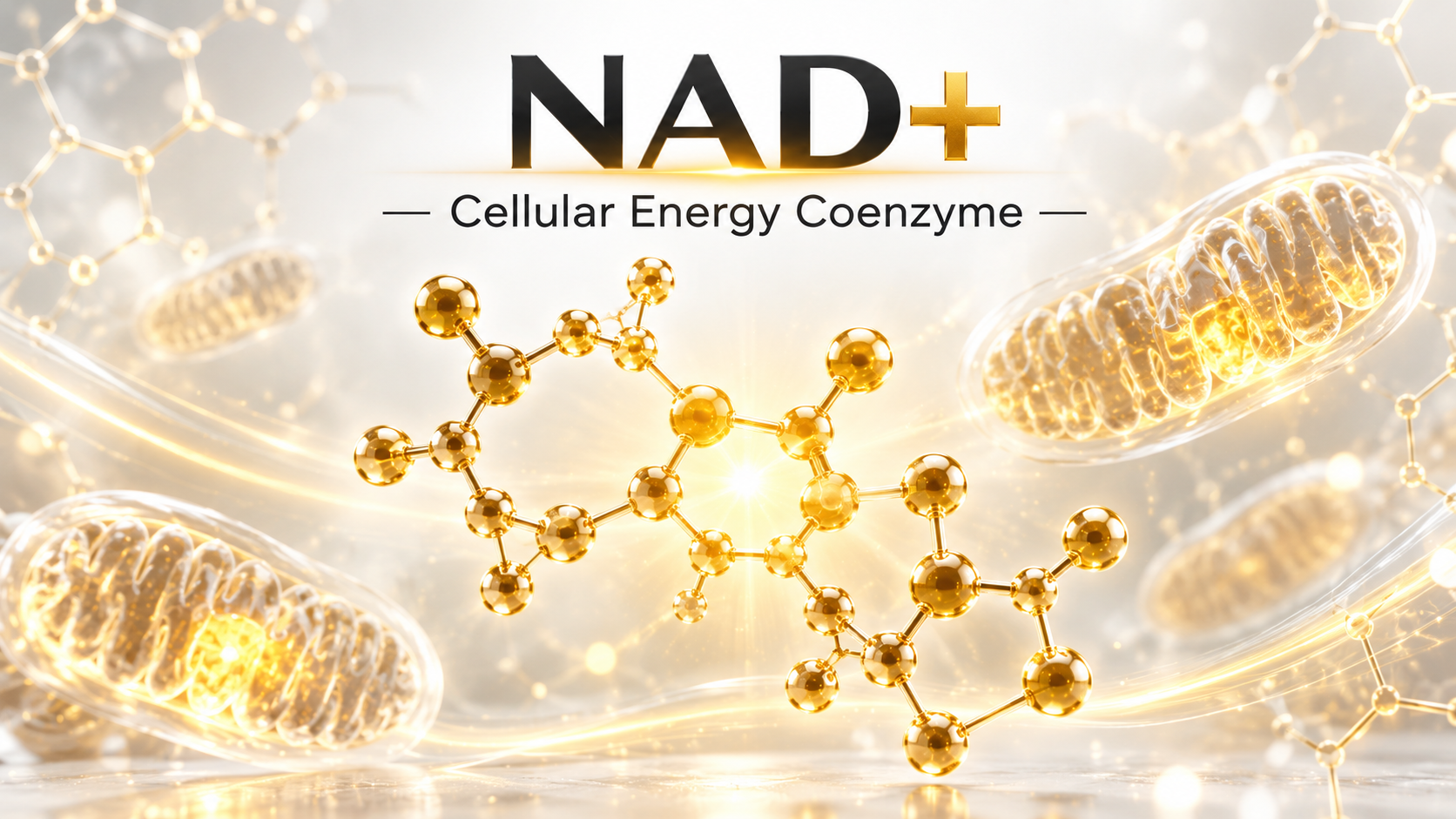
NAD+ plays a vital role in mitochondrial energy metabolism and cellular repair.
Benefits include:
- Supports cellular energy production
- Supports mitochondrial health
- Promotes healthy aging research
Suggested Intake: 250–500 mg daily
Omega-3 Fish Oil
Omega-3 fatty acids support healthy cell membranes and cardiovascular function.
Benefits include:
- Supports heart health
- Supports brain function
- Helps maintain healthy inflammatory balance
Suggested Intake: 1–3 g EPA/DHA daily
Vitamin D3 + K2
Vitamin D3 and Vitamin K2 work together to support bone, immune, and cardiovascular health.
Benefits include:
- Supports immune function
- Supports bone strength
- Complements overall wellness
Suggested Intake: 2,000–5,000 IU Vitamin D3 + 100 mcg Vitamin K2 daily
High-Quality Protein
Adequate protein intake remains essential for muscle maintenance, recovery, and metabolic health.
Aim to consume sufficient protein based on your body weight, activity level, and fitness goals.
Example Research Stack
A commonly discussed mitochondrial support protocol includes:
- MOTS-C – 30 mg
- NAD+ – 1000 mg
- SS-31 – 30 mg
- Retatrutide – 40 mg
- 5-Amino-1MQ – 50 mg
Researchers investigate this combination for its potential to support:
- Mitochondrial efficiency
- ATP production
- Exercise capacity
- Recovery
- Metabolic flexibility
- Cellular energy regulation
Lifestyle Foundations That Maximize Results
No supplement protocol is complete without strong lifestyle habits.
For optimal mitochondrial function, focus on:
- Staying well hydrated
- Eating a nutrient-dense diet
- Consuming adequate dietary fiber
- Prioritizing 7–9 hours of quality sleep
- Managing daily stress
- Maintaining regular physical activity
These foundational habits help support the same biological systems that researchers continue to investigate alongside MOTS-C.
Final Thoughts
MOTS-C represents one of the most promising areas of modern metabolic research. When combined with a comprehensive approach that includes targeted nutritional support, quality recovery, regular exercise, and healthy lifestyle habits, it forms the basis of a well-rounded mitochondrial support strategy.
Although research continues to evolve, combining MOTS-C with scientifically studied nutrients such as CoQ10, PQQ, ALCAR, Berberine, Magnesium, NAD+ precursors, and Omega-3 fatty acids provides a thoughtful, research-informed approach to supporting cellular energy, metabolic health, and overall performance.
Disclaimer: This article is intended for educational and informational purposes only. The compounds discussed are for research purposes and should not be interpreted as medical advice, diagnosis, or treatment. Always consult a qualified healthcare professional before starting any supplement regimen.